100 Sweet Days of School SVG Review
As a professional embroidery designer and product reviewer, I approach every new digital asset with a specific question: will this actually stitch out beautifully on a finished product? When evaluating the 100 Sweet Days of School Svg, my focus shifts immediately from the screen to the hoop. This design captures a nostalgic, celebratory mood that is perfect for marking educational milestones, but translating those sweet aesthetics into thread requires careful consideration of fabric, density, and application. For crafters, Etsy sellers, and apparel decorators, understanding how this graphic performs in real-world scenarios is the difference between a bestseller and a stitch-out failure.
First Impressions and Visual Personality
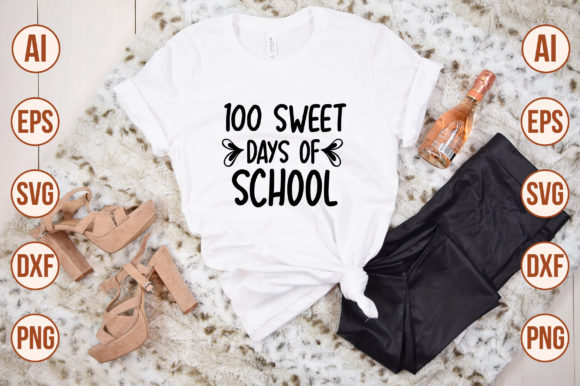
Upon opening the .zip file, which includes AI, EPS, SVG, DXF, PNG, and JPEG formats, the versatility of this graphic becomes apparent. The "Sweet" theme suggests soft lines, playful typography, and likely confectionery or heart motifs associated with the 100-day mark. As a machine embroidery design foundation, it feels approachable rather than overly complex. It avoids the trap of being too juvenile, making it suitable for both kindergarten celebrations and teacher appreciation gifts. However, because this is a digital download only, the burden of digitizing falls on you or your software. The clean vector lines in the SVG and EPS files are excellent starting points for creating custom stitch paths, but you must assess whether the intricate details of the original artwork can survive the transition to satin stitch or fill stitch without becoming muddy.
Real-World Application: The Teacher Sweatshirt Test
To truly evaluate this design, I mentally placed it in a high-demand scenario: a custom crewneck sweatshirt for a teacher celebrating 100 days of school. This is a staple item for any craft business or handmade shop during the winter semester. Sweatshirt fleece is forgiving, but it has texture. When planning this embroidery project, I considered how the 100 Sweet Days of School Svg would sit on that fuzzy surface. If the design relies heavily on thin running stitch outlines, they might get lost in the nap of the fabric. A successful adaptation here would involve increasing column widths for satin stitches or using a tatami fill stitch for larger areas to ensure coverage.
For this specific use case, the design serves as a strong centerpiece. It communicates value and personalization instantly. Customers looking for personalized gifts want clarity; they need to read "100 Days" from a distance. If I were listing this finished product in an Etsy shop, I would use the included PNG file to create a printable mockup first, ensuring the placement looks balanced before ever threading a needle. This step saves time and confirms that the visual weight of the graphics matches the garment size.
Navigating Fabric Limitations and Hoop Sizes
While sweatshirts are ideal, many makers want to use this design on tea towels, baby bibs, or tote bags. These substrates present unique challenges. Tea towels often have a waffle weave or linen texture that demands a heavier stabilizer to prevent puckering. If the 100 Sweet Days of School Svg features dense fill areas, you risk creating a bulletproof patch that distorts the lightweight fabric. In these instances, I recommend modifying the design assets to reduce stitch density or opting for an applique design technique where fabric covers large spaces instead of thousands of stitches.
Hoop size is another critical factor. This design likely needs to be resized for different products. When shrinking vector-based embroidery files, small text elements like "Days of School" can become illegible if the satin columns drop below 1mm. Always check your minimum stitch width settings. Conversely, enlarging the design for a tote bag design or pillow cover requires verifying that the stitch count remains reasonable. Excessive density on a canvas tote can cause needle breaks or fabric tearing. For curved surfaces like caps, flat 2D graphics often distort unless specifically digitized with cap compensation; proceed with caution if adapting this flat SVG for headwear.
Commercial Viability and Customer Trust
For small shop owners and commercial embroidery businesses, consistency is currency. Using the 100 Sweet Days of School Svg allows for brand cohesion across multiple product lines. You can offer matching sets—a shirt for the student and a mug wrap or apron for the teacher—using the same core graphic. This cross-selling potential increases average order value. However, professionalism hinges on execution. A jagged edge or poor registration in the final embroidered patch or apparel piece erodes buyer trust. Before selling, run a test stitch-out on scrap fabric that mimics your final product. Check thread colors against both light and dark backgrounds; a pastel pink that pops on white might vanish on heather gray.
Furthermore, verify your licensing. While the product description lists compatible file types, it does not explicitly state commercial usage terms for the graphic itself. As a responsible creative entrepreneur, confirm whether you can sell finished physical products or if the license restricts you to personal use only. This due diligence protects your business and respects the original artist. Digital product sellers should also note that reselling the raw SVG or DXF files is typically prohibited; your value add must be the finished handmade product or a significantly altered derivative work.
Designer Notes for Optimal Stitch-Outs
To get the most out of this digital embroidery file, treat the provided vectors as a blueprint rather than a final command. Here are practical steps for success:
- Test on Scrap First: Never stitch directly on a customer’s garment without testing. Use similar fabric weight and texture to gauge stabilizer needs.
- Evaluate Detail Level: If the SVG contains tiny sprinkles or fine script, simplify them. Convert dots to French knots or remove micro-details that machines cannot render cleanly.
- Stabilizer Selection: Match stabilizer to fabric, not just design. Stretchy knits need cut-away; woven cottons may suffice with tear-away. Topping is essential for textured fabrics to keep stitches visible.
- Thread Contrast: Ensure high contrast between thread and fabric. Tone-on-tone embroidery looks elegant in photos but can be hard to read in person. Test black and white mockups to verify readability.
- Mockup Accuracy: Use the high-res JPEG or PNG for listings, but add a disclaimer that actual stitching may vary slightly in texture. This manages customer expectations regarding the difference between digital graphics and tactile thread.
Fitting the Design to the Right Project
The 100 Sweet Days of School Svg shines brightest when matched to appropriate items. It is naturally suited for holiday embroidery, classroom party favors, and milestone keepsakes. Baby embroidery projects benefit from its softer aesthetic, provided you use soft backing to prevent skin irritation. For boutique branding, consider using the design as a seasonal limited-edition release rather than an evergreen staple; this creates urgency. Avoid using it on items requiring frequent industrial washing unless you have validated the stitch durability, as decorative accents can degrade faster than structural seams.
Ultimately, this graphic is a versatile tool for makers. Whether you are creating a custom apparel line or a single personalized gift, success lies in respecting the translation from pixel to stitch. By carefully managing density, choosing compatible fabrics, and validating your process through testing, you can turn this digital download into a tangible, high-quality product that delights customers and showcases your craftsmanship. Remember, the file provides the shape, but your expertise provides the soul.