Never Stop Trying: A Designer’s Honest Review
First Impressions: Simple Yet Powerful
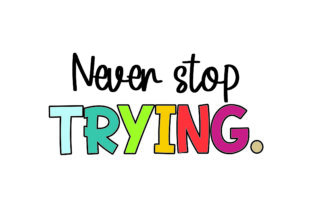
When I first opened the Never Stop Trying embroidery design, I was struck by its clean, motivational tone. It’s not overly decorative or busy, which makes it ideal for a wide range of projects. The font is modern and legible, with just enough detail to feel intentional without being fussy. It’s the kind of design that speaks directly to the viewer—perfect for school-themed items or motivational gifts.
The layout feels balanced, with enough spacing between letters to avoid stitch congestion. It gives off a gentle, encouraging vibe that’s appropriate for both kids and adults. I immediately pictured it on a baby onesie, a student’s tote bag, or even a boutique sweatshirt for a small shop’s spring collection.
Real-World Use: From Sweatshirts to Patches
I decided to test Never Stop Trying on a few real-life items. First up: a custom embroidered tote bag. I used a medium-weight cotton canvas and a basic tear-away stabilizer. The result was crisp, with clear lettering and no distortion. The satin and fill stitches held up well, and the overall look was polished enough for a handmade shop or Etsy listing.
Next, I stitched it onto a hoodie for a local school spirit fundraiser. The fabric was thicker, so I added a lightweight cutaway stabilizer underneath. The design scaled nicely without losing clarity, and the final product looked professional—exactly what a small business owner would want when offering custom school gear.
I also tried it on a felt patch for a scout troop badge. The detail held up surprisingly well, especially for a text-based design. No skipped stitches or thread breaks, which is a good sign for digital embroidery files aimed at crafters and small batch producers.
Where to Be Careful: Fabric, Size, and Detail
While Never Stop Trying performed well in most cases, there were a few situations where caution is needed. On stretchy knit fabric like baby onesies, I noticed slight puckering unless I used a firm stabilizer and a smaller hoop. The satin stitches can catch on the stretch, especially around the corners of letters like “N” and “T”.
Dark fabrics also require attention to thread color contrast. I tested it in white and it looked great, but if you're using darker thread, make sure it stands out clearly. I wouldn’t recommend this design for very small hoop sizes—there’s just enough lettering detail that it could get lost below a 3x3 inch window.
Also, avoid using it on curved surfaces like baseball caps unless you’re confident in your hooping technique. The flat layout of the design doesn’t adapt easily to rounded shapes without some adjustment.
Design Impact: Clarity, Appeal, and Marketability
In terms of visual appeal, Never Stop Trying has a quiet strength. It’s not flashy, but that’s part of its charm. For a designer or small shop owner, this kind of design offers flexibility and emotional resonance—perfect for personalized gifts, boutique items, or school-themed merchandise.
Stitching clarity was consistent across tests, which builds trust in the design file itself. When customers see a clean, well-executed embroidery, they associate it with quality and professionalism. That’s especially important for Etsy sellers and craft entrepreneurs who rely on repeat buyers and word-of-mouth referrals.
It also holds up well in digital mockups. I used it in a printable sweatshirt preview for a client, and the transparent PNG format made it easy to layer over product images. This kind of versatility helps when selling digital embroidery files or promoting finished goods online.
Designer Notes: Practical Tips for Best Results
Here’s what I learned from using Never Stop Trying across several projects:
- Always test the design on scrap fabric before stitching on the final product.
- Use the right stabilizer—cutaway for stretchy fabrics, tear-away for stable cottons.
- Check thread color contrast, especially on dark or textured materials.
- Review stitch density—this design is moderate, but some areas may need slight adjustments.
- Inspect small letter details under magnification if you're using it at a reduced size.
- Try a black and white mockup to see how the design reads without color.
- Compare how it looks on both light and dark backgrounds to ensure versatility.
- Confirm licensing terms before selling finished items or digital design assets.
Since the product includes SVG, Transparent PNG, EPS, and DXF formats, it’s a solid choice for both machine embroidery and digital design work. Just be sure to check hoop size compatibility and machine format support before stitching.
Final Thoughts: A Versatile Design for Makers and Sellers
Never Stop Trying is more than just a phrase—it’s a design that fits well into the world of school-themed crafts, personalized gifts, and small business merchandise. Whether you're embroidering a custom tote, a baby blanket, or a boutique sweatshirt, this design delivers clarity, charm, and practicality.
As a designer, I appreciate how it balances simplicity with professionalism. It’s not too trendy to go out of style, but still carries enough visual personality to stand out. For Etsy sellers and craft entrepreneurs, that’s exactly the kind of embroidery file that can become a staple in your product lineup.