I'm in Nursing School SVG: A Designer's Embroidery Review
As a professional embroidery digitizer and product reviewer, I approach every new graphic with a specific question: will this actually stitch out cleanly on real fabric? When evaluating the I m in Nursing School Svg, Nurse Svg, my focus shifts immediately from its digital appearance to its physical performance. This design is marketed heavily for vinyl cutting machines like Cricut and Silhouette, but for those of us in the machine embroidery space, it represents a different set of challenges and opportunities. The typography-driven nature of this graphic suggests a bold, declarative aesthetic that is perfect for student nurses, but translating vector lines into thread requires careful consideration of stitch density, fabric choice, and end-use durability.
First Impressions and Visual Personality
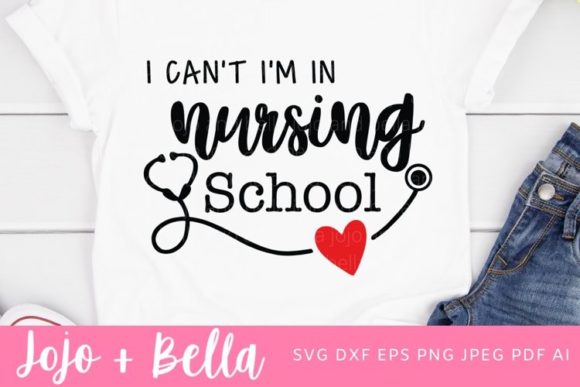
Upon opening the file, the layout presents a confident, collegiate vibe. The phrase "I'm in Nursing School" typically utilizes a mix of script and block lettering to create visual hierarchy. For an embroidery project, this contrast is vital. Block letters translate beautifully into satin stitch or fill stitch columns, providing a solid anchor for the design. However, if the original SVG contains thin, hairline script elements intended for vinyl weeding, these can be problematic for needle and thread. In my assessment, this design carries a mood of pride and exhaustion—a relatable combination for nursing students. It feels less like a generic medical symbol and more like a personal badge of honor. This emotional resonance is exactly what sells handmade products on Etsy or at campus craft fairs. As a graphics asset, it has strong commercial potential, provided the digitizing respects the limitations of thread tension.
Real-World Application: The Clinical Tote Bag Test
To truly judge the viability of this machine embroidery design, I mentally placed it on a canvas clinical tote bag. This is perhaps the most common use case for nursing students who need to carry textbooks, stethoscopes, and supplies. Canvas is a stable, woven fabric that generally accepts embroidery well, making it an ideal testing ground. In this scenario, the I m in Nursing School Svg, Nurse Svg serves as a centerpiece. The bold lettering would likely require a medium-weight cutaway stabilizer to prevent puckering, especially if the design includes dense fill areas.
When stitching this onto a tote, I considered the placement. Center-chest or upper-back placement works best for readability. If the design features intricate flourishes often found in nurse-themed graphics, I would recommend simplifying them for embroidery. Vinyl allows for razor-thin details; embroidery does not. On a textured canvas, tiny running stitches can get lost or break. Therefore, when adapting this SVG for a tote bag design, increasing the column width of the lettering ensures the message remains legible from a distance. The result is a durable, washable item that withstands the rigors of clinical rotations, far outlasting any iron-on transfer alternative.
Fabric Considerations and Technical Limitations
While canvas is forgiving, many makers want to apply this design to apparel like scrub tops, t-shirts, or sweatshirts. Here, the technical evaluation becomes stricter. Scrub fabric is often a poly-cotton blend with a slight stretch. Using this design on stretchy fabric demands a high-quality fusible no-show mesh stabilizer. Without it, the hoop tension combined with the stitch density of the lettering will distort the garment, leaving a permanent outline where the hoop sat.
I must also caution against using this specific graphic on highly textured fabrics like terry cloth towels or fleece blankets without modification. The fine details inherent in many "Nurse Svg" files are designed for smooth surfaces. On terry cloth, those details sink into the pile. If you intend to create a holiday embroidery gift or a nursery item using this theme, you must add a topping stabilizer or increase the underlay stitching to push the fabric nap down. Furthermore, dark fabrics present a contrast challenge. If the SVG relies on negative space or internal cutouts to define letters, those features may disappear on navy or black scrubs unless you adjust the thread colors or add an outline stitch.
Commercial Viability for Makers and Sellers
For the Etsy seller or small business owner, this design offers significant versatility, but licensing is paramount. Before listing any finished product, verify whether your purchase includes commercial embroidery rights. Many SVGs are licensed solely for vinyl cutting. Assuming you have cleared the rights, this design is a powerhouse for niche marketing. It targets a specific demographic during peak seasons: graduation, Nurses Week, and back-to-school semesters.
From a branding perspective, consistency matters. If you are selling custom apparel or personalized gifts for nursing cohorts, this design pairs well with simpler icons like caduceus symbols or stethoscopes. However, avoid overcrowding. A clean, readable application of the I m in Nursing School Svg, Nurse Svg conveys professionalism. Cluttered designs with too many competing elements look amateurish and reduce perceived value. Buyers trust shops that demonstrate technical competence through crisp registration and appropriate stabilizer choices. When creating printable mockups or digital previews for your shop, ensure they accurately represent how thread behaves versus ink. Misleading customers with flat vector images when the actual embroidery has texture and dimension leads to returns and negative reviews.
Essential Notes for Embroidery Success
Transitioning from a vector cut file to an embroidery file is not automatic. Whether you are digitizing this yourself or purchasing a pre-digitized version based on this graphic, adhere to these practical guidelines:
- Test Stitch First: Never run this design directly on a final product without a test sew-out on similar scrap fabric. Check for registration errors between color changes.
- Verify Hoop Size: Ensure the design dimensions fit comfortably within your hoop with adequate margin for stabilization. Do not max out your hoop size; leave room for proper tension.
- Check Thread Contrast: View the design in black and white before stitching. If the values are too similar, the text will be unreadable regardless of color vibrancy.
- Assess Stitch Density: If the SVG was auto-digitized, the density may be too high for knits or too low for wovens. Manually adjust compensation settings to account for fabric push-and-pull.
- Inspect Small Details: Any element smaller than 1mm in height should be removed or enlarged. Needles cannot reliably stitch microscopic details without causing thread breaks or bird nesting.
- Confirm Licensing: Double-check terms for both personal and commercial embroidery use. Document your license in case of platform audits.
Final Verdict on Design Utility
The I m in Nursing School Svg, Nurse Svg is a culturally relevant and emotionally resonant asset for the crafting community. Its strength lies in its specificity; it speaks directly to a dedicated group of individuals navigating a demanding career path. For the vinyl crafter, it is a straightforward cut file. For the embroidery designer, it is a template that demands respect for textile mechanics. When executed with proper stabilizer, appropriate stitch types, and mindful scaling, it transforms from a simple digital graphic into a cherished handmade product. Whether applied to a sweatshirt for late-night study sessions or a cap for graduation, this design succeeds when the maker prioritizes stitch quality over digital complexity. Always remember that in embroidery, the fabric dictates the rules, and the best designs are those that work in harmony with the material rather than fighting against it.