Teacher Christmas SVG: A Designer’s Stitch Test
When evaluating digital assets for physical production, there is often a disconnect between how a graphic looks on a screen and how it translates into thread or vinyl. As a designer who regularly bridges the gap between digital graphics and tangible handmade products, I approached this Teacher Svg, Teacher Christmas svg collection with a critical eye toward manufacturability. While the product description highlights its suitability for cutting vinyl, iron-on transfers, and Infusible Ink, my primary focus was assessing its structural integrity for mixed-media projects and potential embroidery digitizing. The aesthetic immediately strikes a balance between nostalgic holiday warmth and modern classroom appreciation, but visual appeal is only half the battle in professional crafting.
First Impressions and Visual Hierarchy
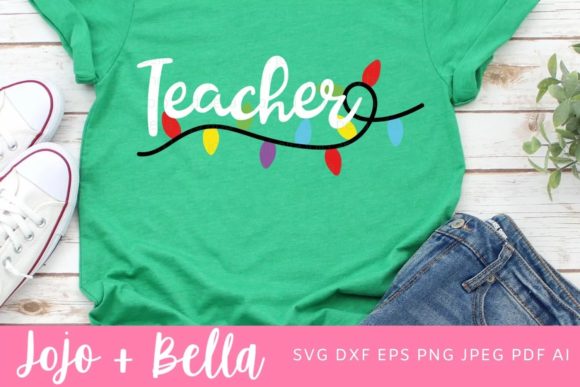
Upon opening the files, the layout of the Christmas Lights SVG elements feels intentionally balanced rather than randomly scattered. For an embroidery designer or apparel decorator, negative space is just as important as the design itself. This Teacher Christmas svg respects that space, allowing the string of lights to frame text or central motifs without overwhelming the garment. The lines are clean and distinct, which is a crucial indicator of quality. In the realm of Graphics and Crafts, jagged vectors or overly complex nodes can spell disaster during production. Here, the smooth curves suggest that if you were to convert this into a machine embroidery design, the resulting satin stitch or running stitch outlines would be crisp rather than jagged.
The mood created by this Xmas Lights Svg is versatile. It avoids the overly juvenile cartoon style that limits marketability, leaning instead into a cozy, boutique-friendly aesthetic. This makes it appropriate for adult teacher apparel, staff lounge decor, or sophisticated holiday gifts rather than just student crafts. When I visualize this on a cream-colored sweatshirt or a natural canvas tote bag design, the visual weight feels correct. It has enough presence to be seen from a distance but retains enough delicacy to feel like a personalized gift rather than mass-produced merchandise.
Real-World Application: The Holiday Staff Sweatshirt
To truly judge the utility of this Teaching sag asset, I mentally prototyped a specific project: a custom embroidered crewneck sweatshirt intended for an end-of-year teacher gift. This scenario tests both the aesthetic and technical limits of the design. Sweatshirt fleece is a textured, unstable fabric that demands respect. If using this as a cut file for heat transfer vinyl (HTV), the design’s line weight appears sufficient to prevent peeling after washing, provided you use quality materials and proper pressure. However, for those of us looking to integrate this into embroidery projects, the evaluation goes deeper.
If I were digitizing this Teacher Svg for that sweatshirt, I would treat the light strings as running stitches and the bulbs as small fill stitch areas or applique design elements. The spacing between the lights is generous enough to accommodate standard hoop sizes without requiring excessive re-hooping. This is vital for commercial embroidery efficiency. A design that requires three hoop changes for a simple string of lights kills profit margins. This layout allows for a single placement on the left chest or centered yoke area, making it ideal for small shop product runs where time equals money. The visual personality suggests it would pair beautifully with a simple serif font for a name or school year, creating a cohesive piece of custom apparel that parents or administrators would be proud to gift.
Technical Considerations for Mixed Media
While this product is marketed as a vector graphic for cutting, experienced makers know that cross-platform compatibility defines true value. When adapting this String of Christmas Lights svg for needle and thread, fabric texture becomes your primary constraint. On smooth cotton or polyester blends, the design will render faithfully. However, on high-pile fabrics like terry cloth towels or plush blankets, the thin connecting lines of the lights risk getting lost in the nap. In these cases, I recommend using this SVG as a template for an applique design or adding a background fill stitch base to elevate the details above the fabric texture.
Stitch density is another factor to monitor if converting this digital embroidery file manually. The bulbs in this design likely have varying sizes. If digitized as solid fills, ensure the underlay is adequate to prevent puckering on stretchy knits. Conversely, if used strictly as vinyl for a baby embroidery alternative (like a onesie where direct stitching might irritate skin), verify that the smallest internal cutouts are large enough for your blade to navigate without tearing. Nothing ruins a finished product faster than weeding out tiny, torn vinyl fragments. Always test on scrap fabric first, especially when working with dark fabrics where contrast issues might hide fine details until it is too late.
Evaluating Commercial Viability for Sellers
For Etsy sellers and creative entrepreneurs, the question isn't just "does it look good?" but "will it sell?" This Teacher Christmas svg possesses strong giftability. It targets a specific emotional niche—teacher appreciation during the holidays—which historically performs well in Q4. The design assets included allow for variety; you aren't locked into a single rigid composition. This flexibility supports brand consistency across different product lines. You could use the full string of lights on a tote bag design and isolate a single bulb ornament for a matching keychain or patch, creating a recognizable collection.
However, professionalism requires due diligence. Before listing any finished product or digital derivative, confirm the licensing terms associated with this specific download. Does the license cover commercial embroidery? Can you sell physical items made with this design? Protecting your business means understanding these boundaries. Additionally, when creating printable mockups for your listings, ensure the digital representation matches the physical reality. If you are selling the SVG for other crafters to use, provide clear guidance on layer organization. If you are selling the finished embroidered patch or shirt, photograph the actual stitch-out. Customers trust handmade presentation that shows real thread texture over generic digital renders. This transparency builds buyer engagement and reduces returns based on unmet expectations.
Designer Notes for Optimal Results
Based on my review of the geometry and intended use cases, here are practical adjustments to ensure success with this design:
- Contrast Testing: Always view the design in black and white before production. If the lights disappear against a dark background in grayscale, they will lack definition in thread or dark vinyl. Adjust stroke widths accordingly.
- Stabilizer Selection: For knit apparel featuring this Xmas Lights Svg, use a cut-away stabilizer to maintain shape. Tear-away is rarely sufficient for designs with horizontal spanning elements like light strings, which can distort the fabric grain.
- Detail Inspection: Zoom in to 400% to check node placement. Smooth out any unnecessary anchor points before sending to a cutter or digitizing software to ensure fluid motion and cleaner edges.
- Mockup Strategy: Create mockups on both light and dark garments. Teacher demographics vary, and showing the design on a navy hoodie versus a white tee demonstrates versatility to potential buyers.
- Washability Check: If producing tea towels or aprons that face frequent laundering, consider outlining vinyl elements with a permanent marker or fabric paint touch-up, or digitizing the design entirely for durability. Vinyl on high-wear items needs reinforcement.
Ultimately, this Teacher Svg serves as a robust foundation for holiday crafting. Whether you are cutting vinyl for a quick classroom party favor or digitizing a heirloom-quality ornament, the design’s structure supports professional execution. By respecting the technical requirements of your chosen medium and validating the design against real-world constraints, you transform a simple digital graphic into a valued, tangible product that celebrates educators with the quality they deserve.